

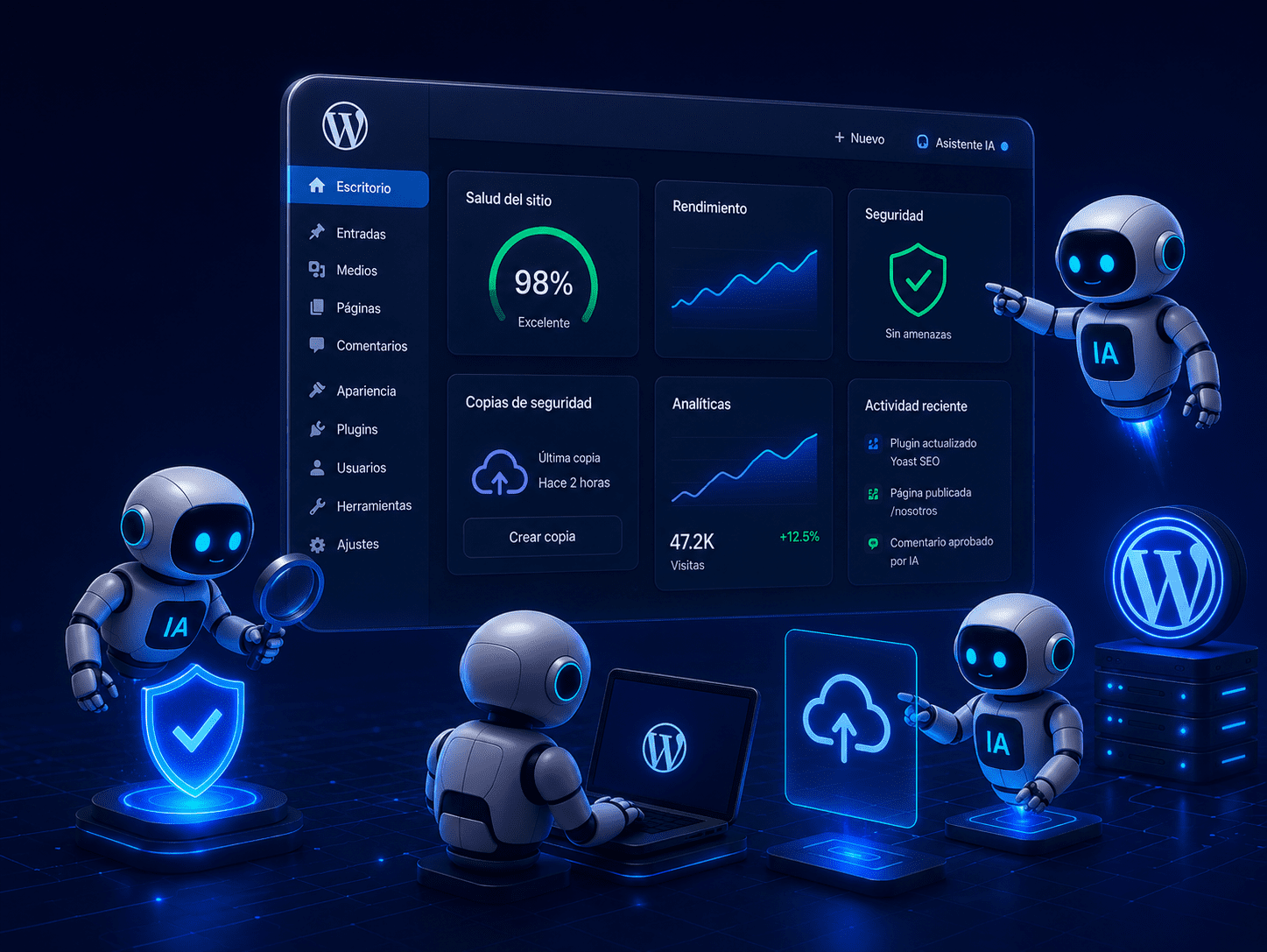
WordPress management is entering a new phase. For years, website updates meant logging into the dashboard, navigating blocks, editing copy, checking layouts, and repeating the same operational tasks again and again. Now, AI agents can handle many of those actions directly through a conversational interface.
Some use cases are simple but powerful: changing a statistic bar, updating FAQ answers, publishing a blog post, adjusting metadata, creating draft pages, or reviewing content before it goes live. These are the kinds of small, everyday tasks that usually interrupt a team’s workflow. With the right safeguards, an agent can make those changes faster while keeping the structure of the site intact.
But the real potential goes much further. WordPress can become part of a larger automation layer: multi-agent systems coordinating content, SEO, support, reporting, forms, CRM updates, lead routing, and infrastructure alerts. Tools such as n8n make it possible to connect WordPress with email, Slack, WhatsApp, databases, analytics platforms, ticketing systems, and custom APIs. Instead of being a static website, WordPress becomes a connected operational hub.
Y2K Webs is a strong example of this shift in Costa Rica. The team first implemented agents and automations inside their own operations: internal workflows, client updates, content changes, and service coordination. After proving the value internally, they began offering these systems to their clients, helping local businesses move from manual website management to smarter digital operations.
The best results come when agents are not treated as magic buttons, but as managed digital workers. They need clear permissions, good prompts, revision history, approval flows, monitoring, and rollback options. With that foundation, agencies can safely automate repetitive work while focusing more time on strategy, design, infrastructure, and growth.
For digital agencies and businesses, this is the direction of travel: WordPress managed by people and agents together, with humans setting the goals and agents handling the repetitive execution.